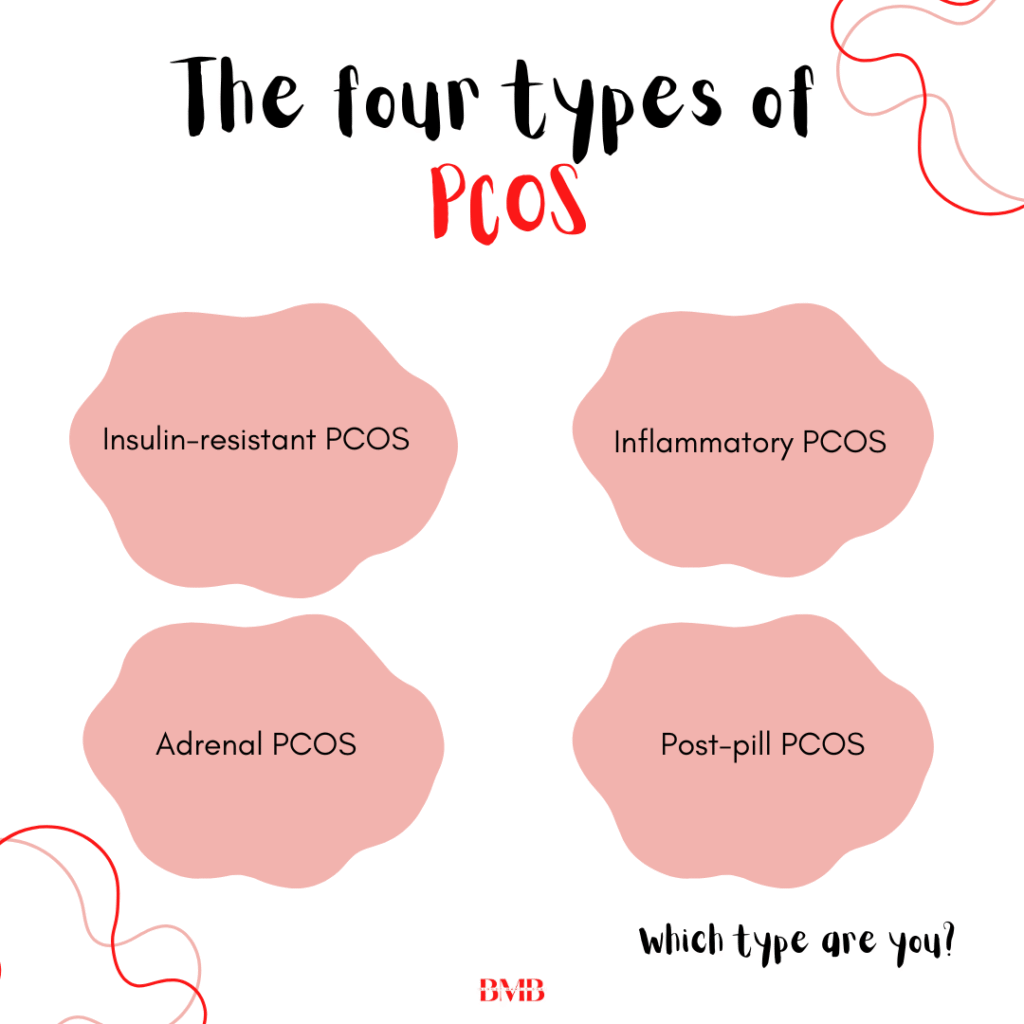

If you’ve spent time on Instagram, TikTok, or health blogs, you’ve probably seen people talking about different “types of PCOS” like insulin-resistant, inflammatory, or post-pill PCOS. When it comes to PCOS, not everyone experiences it in the same way. While the official medical guidelines don’t formally separate PCOS into subtypes, many practitioners and researchers describe different “patterns” of the condition to better explain symptoms and tailor management approaches. These types can overlap and they are not universally agreed upon, but they provide a useful framework for understanding why PCOS looks different from one person to another.
Here’s what you need to know:
- These “types” are not official medical categories. Doctors don’t diagnose PCOS in subtypes this way.
- They are functional descriptions used by nutritionists, health coaches, and some integrative practitioners to help personalize treatment.
- While debated, many women find them helpful in understanding their symptoms and tailoring lifestyle changes.
Types of PCOS
The most common type is insulin-resistant PCOS, which is closely tied to how the body processes sugar. In this case, the body doesn’t respond well to insulin, causing blood sugar levels to rise and the pancreas to release even more insulin in compensation. This excess insulin can disrupt hormone balance and increase androgen levels. People with this type often notice weight gain around the belly, constant sugar or carbohydrate cravings, patches of darkened skin known as acanthosis nigricans, and unshakable fatigue. Management usually focuses on lowering blood sugar and improving insulin sensitivity through a balanced low-glycemic diet, consistent movement, stress reduction, and sometimes medication such as metformin.
Another form often described is post-pill PCOS, which appears in some people after they stop taking hormonal birth control. Because the pill works by suppressing natural hormone production, the body may rebound with a temporary surge of androgens once it’s discontinued. This can lead to irregular cycles, acne, and other PCOS-like symptoms. The encouraging part is that post-pill PCOS typically improves within three to twelve months as the body regains its natural rhythm. Supportive lifestyle adjustments and, in some cases, supplements to stabilize hormones can help during this transition period.
There is also what’s known as inflammatory PCOS, thought to be driven by chronic, low-grade inflammation in the body. This inflammation can interfere with normal hormone signaling and contribute to the rise of androgens. Symptoms may include persistent fatigue, headaches, joint pain, skin flare-ups such as eczema, or elevated markers of inflammation on blood tests. Managing this type of PCOS often involves an anti-inflammatory diet rich in whole foods, prioritizing sleep, managing stress, and limiting environmental triggers such as smoking or pollution.
Finally, though less common, there’s adrenal PCOS, which differs from the others because the excess androgens come not from the ovaries but from the adrenal glands. The hallmark sign here is elevated DHEA-S levels on blood work, while other androgen markers remain normal. People with adrenal PCOS often have a history of high stress and ongoing fatigue, since the adrenal glands are heavily tied to the body’s stress response. Addressing this form involves strategies to support the nervous system, reduce stress, and, in some cases, medical treatment.
Why Knowing the “Type” Might Help You
Even though these types aren’t officially recognized, they can give you:
- A clearer understanding of why your symptoms show up the way they do.
- A starting point for personalized lifestyle changes.
- A way to have more informed conversations with your doctor or nutritionist.
But remember: only a medical professional can diagnose PCOS. Use the “types” as tools for self-awareness, not labels that box you in. Also, it’s important to remember that these types aren’t mutually exclusive; a person may show features of more than one. Still, understanding them can help people feel less confused about their symptoms and more empowered to seek personalized treatment.