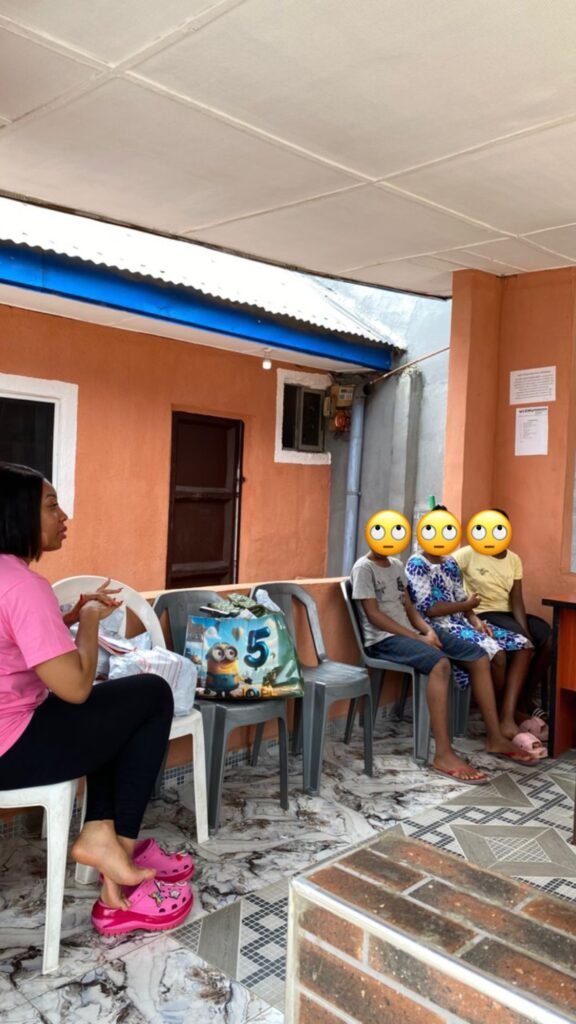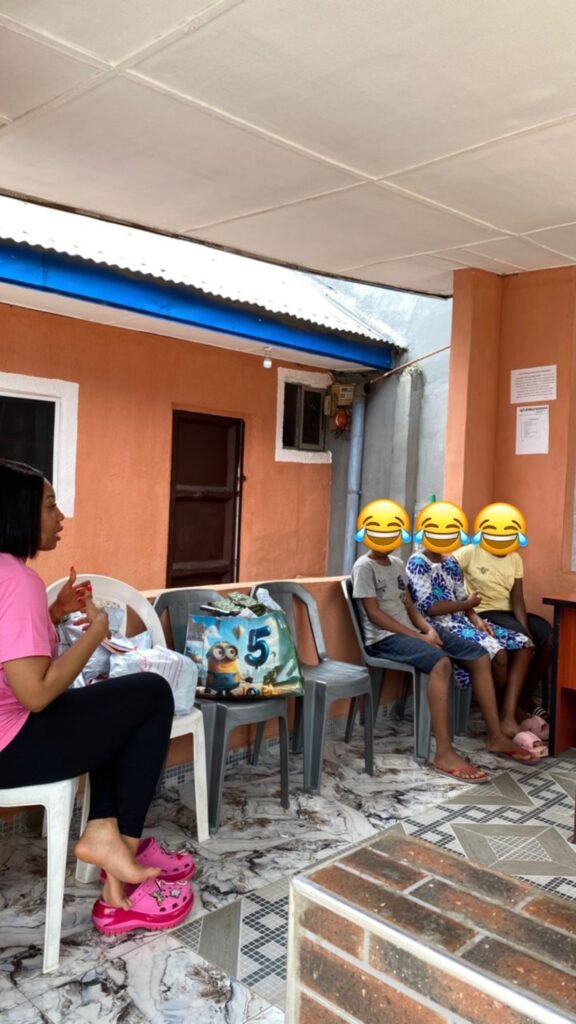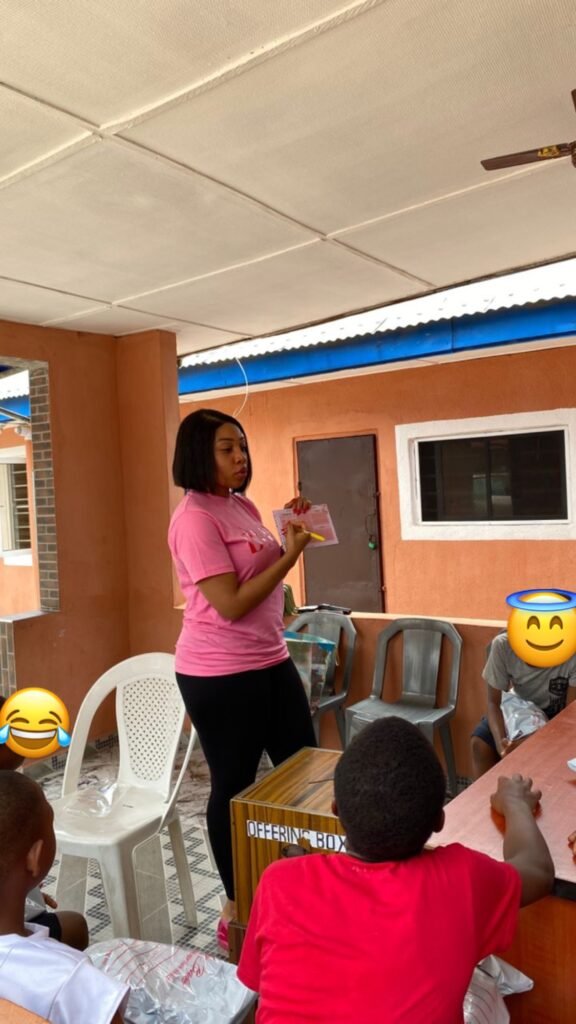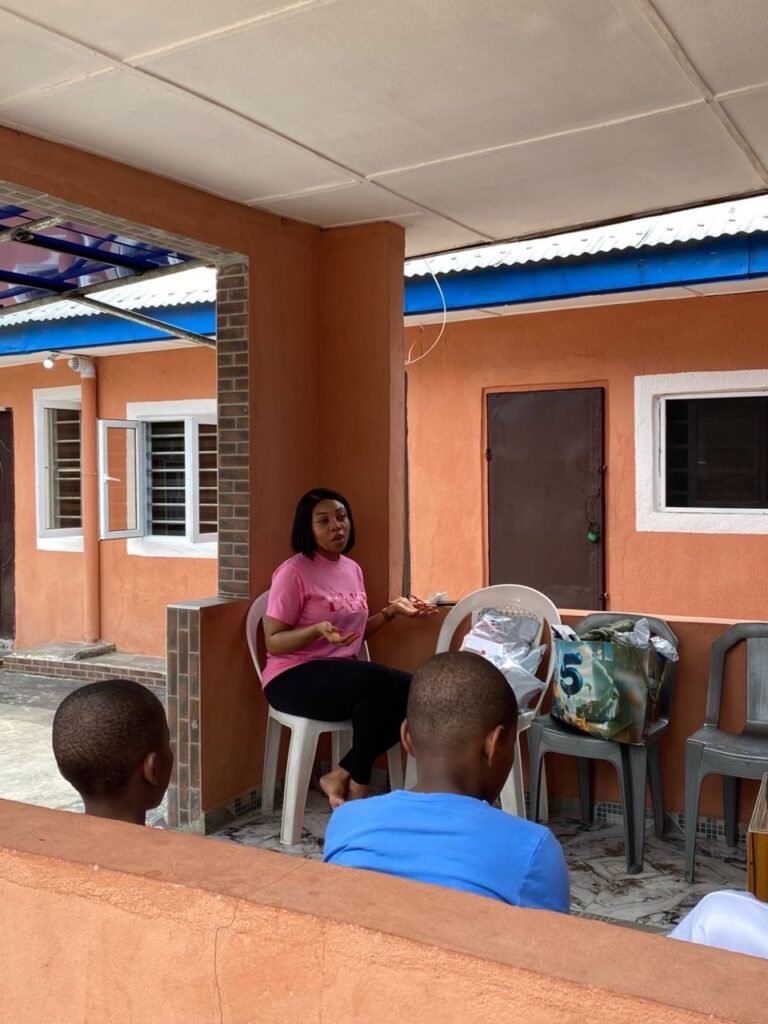

Today, the 25th of October 2025, at De Lemu Orphanage, Port-Harcourt we sat down with twelve adolescent girls between the ages of 9 and 16. It began with a simple question: “How many of you have started menstruating?” Seven small hands went up. The younger ones, still waiting for their first period, listened closely, eager to understand what awaited them.
I introduced myself and the BMB Period Care team, explaining why we were there; to talk about something natural, important, and often misunderstood: menstruation.
We started by defining what menstruation is, when it usually begins, and how long it typically lasts. Together, we explored how to record and calculate period days, what irregular periods are, and why they happen. I reminded them that every girl’s body is different and that listening to your body is key. We emphasized the importance of seeking medical help whenever something feels off, and that as they grow, their cycles, symptoms, and experiences may change often because of hormonal shifts.
From there, we discussed menstrual hygiene; what it means, why it’s important, and how to maintain it. When I asked how they usually dispose of their used pads, their answer stopped me.
They explained that they tear open the used pad, rinse the blood out, flush it, and then throw away the wrapper. When I asked why, they said it was because of a widespread fear that their menstrual blood could be used for rituals by men.
We took time to gently correct this belief, explaining that their glory and future can never be trapped in a waste product, and that their destiny is defined by their choices, education, and faith. For reassurance, we shared Bible verses affirming their strength and worth. We then suggested an alternative, safer disposal method of collecting and burning used pads at the end of each month which they agreed was both easier and more protective.
Next, we introduced them to different menstrual care products beyond pads: menstrual cups, discs, tampons, and even boric acid suppositories. These were new to them, so we explained how each works and how to dispose of them properly.
To ensure the discussion had made an impact, we asked, “Why is it important to practice good menstrual hygiene?” Two girls quickly answered, “To prevent infections and to stay comfortable.” They were right and we built on that by sharing a few more reasons.
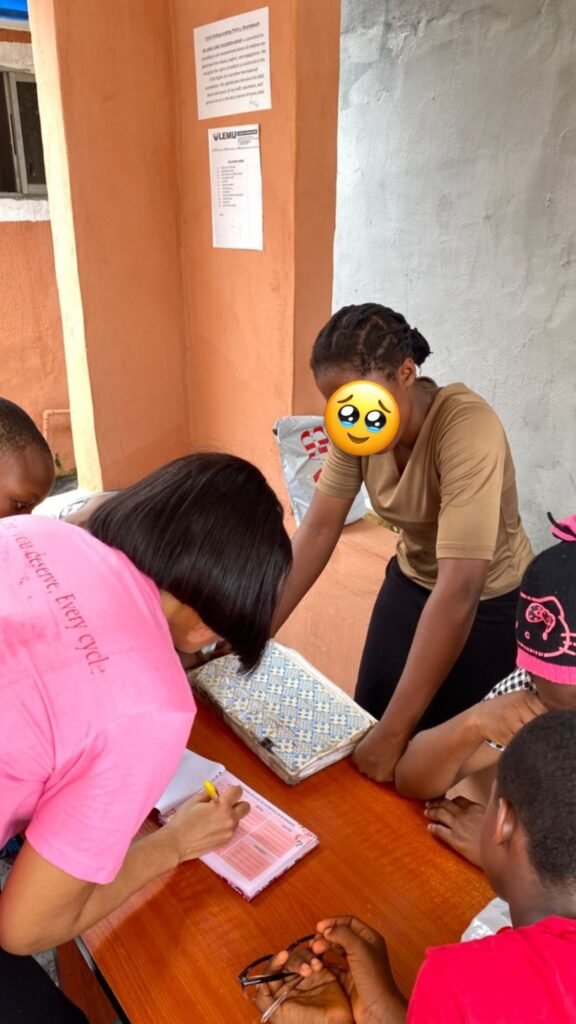
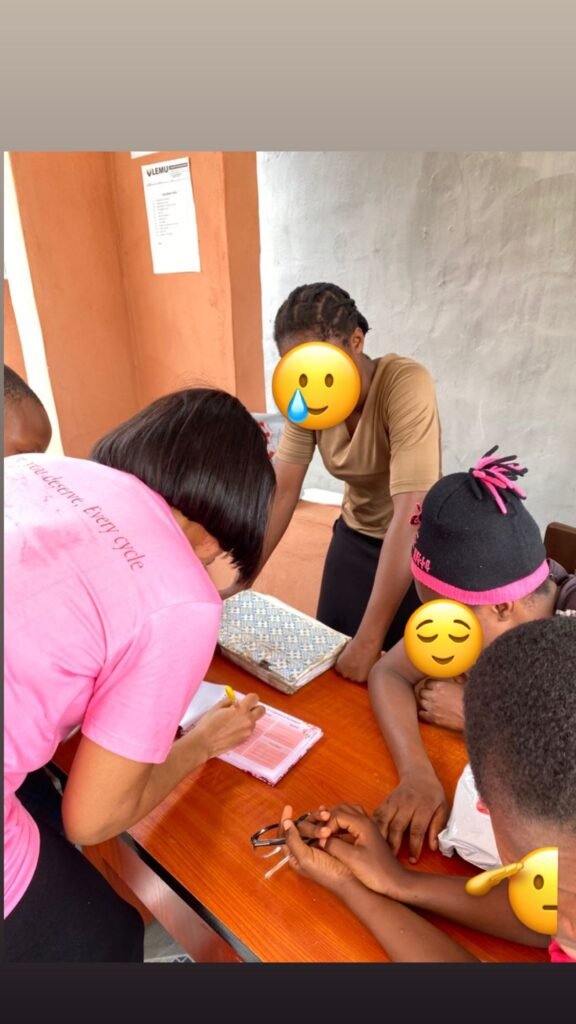
We ended the one-hour session (11:50 a.m. – 12:50 p.m.) with an open Q&A on irregular periods, sharing honest answers and reassurance. Finally, we distributed mini care packages each containing pads, liners, wipes, period tracking note, a pen, snacks, and a drink to encourage healthy period practices.
As we packed up, I felt an overwhelming sense of purpose. These conversations rooted in truth, care, and empowerment are how menstrual stigma begins to fade. Every girl deserves to understand her body, manage her cycle with confidence, and celebrate her womanhood with pride.